
Can You Get Veneers on Crooked Teeth?
Can You Get Veneers on Crooked Teeth?
Many people want a straighter smile but are not always ready for lengthy orthodontic treatment. In such cases, a common question arises: can veneers be used to conceal crooked teeth?
How Do Veneers Work?
Veneers are thin ceramic or composite shells that are bonded to the front surface of the teeth. They do not move the teeth but change their appearance, including their shape, length, proportions, and color.
That is why veneers are not used to actually straighten teeth but rather for aesthetic correction. They are most commonly used to:
- conceal mild crookedness of one or more front teeth;
- close small gaps between teeth;
- improve the length or shape of teeth;
- conceal chips or worn edges.
Insert before-and-after veneer photos showing natural results
When Can Veneers Be Used?
Veneers may be a good option if:
- the teeth are only slightly crooked;
- the teeth do not significantly overlap;
- the bite is generally normal;
- the patient wants to achieve an aesthetic result more quickly.
In these cases, veneers can make the smile appear straighter without lengthy orthodontic treatment.
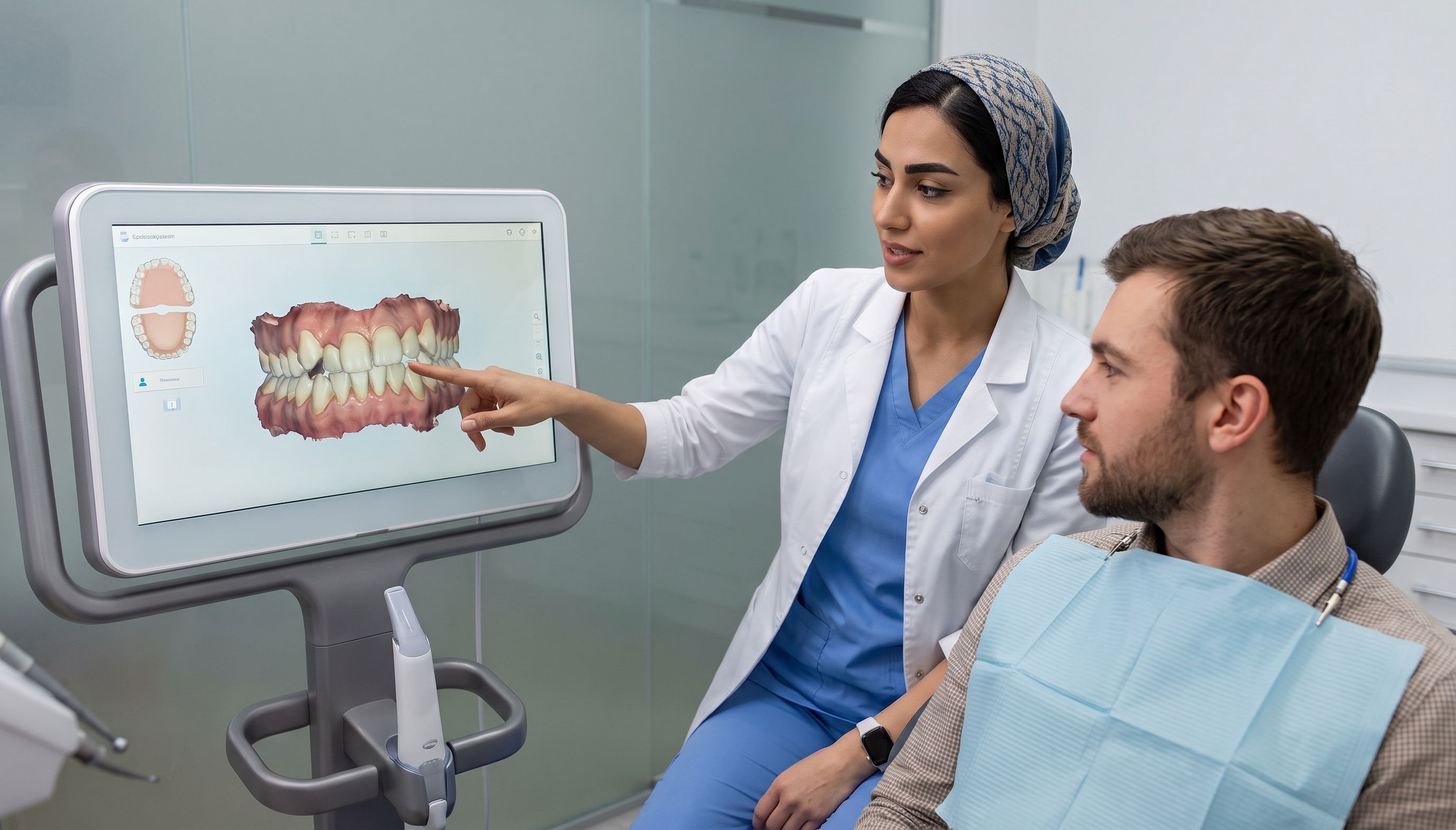
However, even when teeth look similar from the outside, the appropriate treatment plan can be different. That is why the best option is to have a full consultation so that a dentist can assess the position of the teeth, the bite, and the condition of the enamel. This can help avoid unnecessary tooth preparation and determine a treatment approach that provides a natural and long-lasting result.
When Are Veneers Not Recommended?
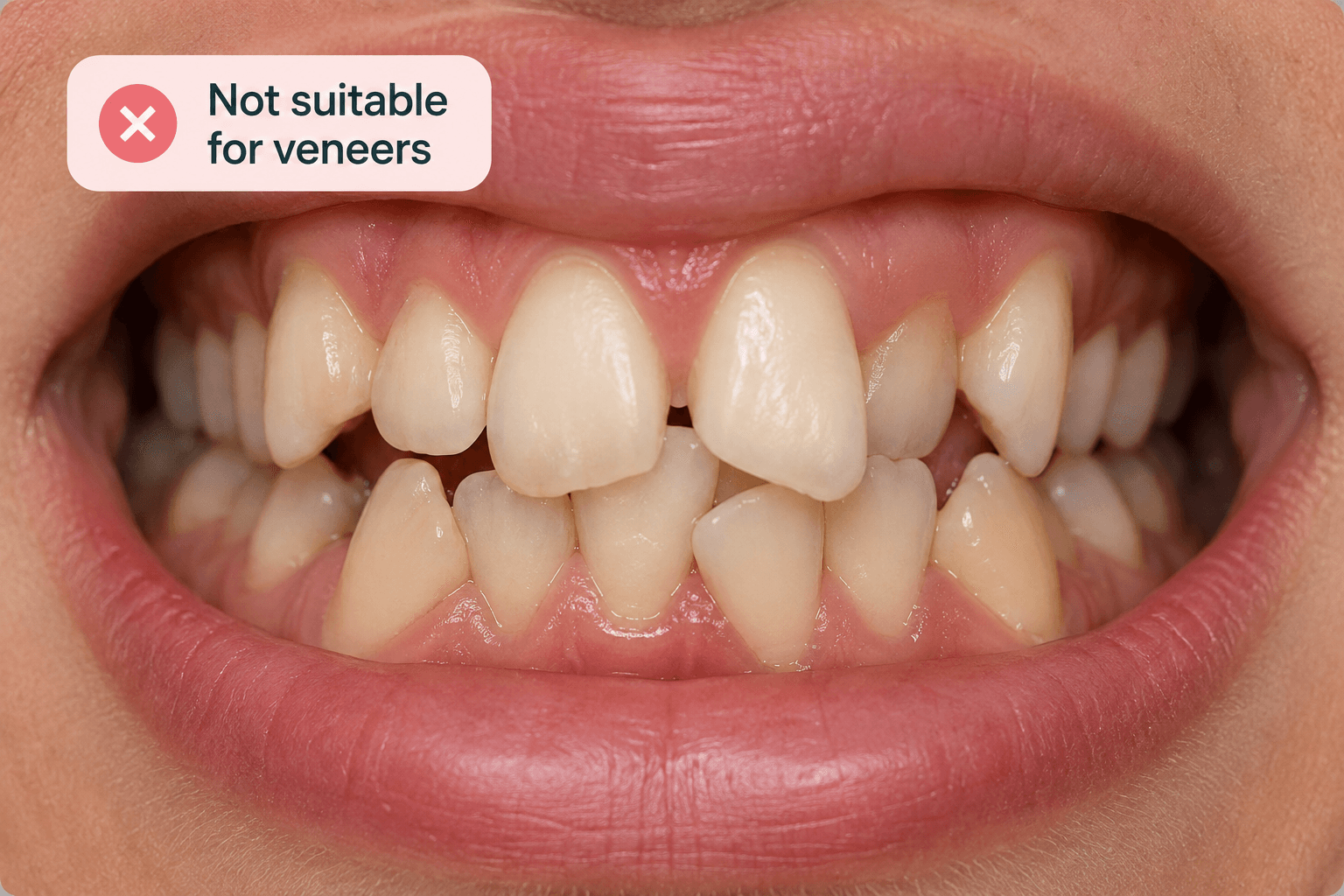
If the teeth are significantly misaligned, overlap each other, or the crookedness is related to a bite problem, veneers alone may not be sufficient.
In such cases, a dentist may recommend orthodontic treatment first, followed by aesthetic restoration if needed. Particular attention should be paid if:
- the teeth significantly overlap;
- one or more teeth protrude considerably;
- there is a significant bite problem;
- the position of the teeth affects chewing.
What Does a Dentist Check Before Placing Veneers?
Even if the teeth appear suitable for veneers, the final decision should only be made after proper diagnostics. The dentist will assess:
- tooth position;
- enamel condition;
- gum health;
- bite;
- X-rays;
- the chewing forces that the future veneers will need to withstand.
If a clinic promises an exact treatment plan based on just one photo and without a proper examination, it is a good reason to ask additional questions.
Start with a match, not a random list of clinics
Answer a few questions and see which factors matter for your case
Do Teeth Need to Be Shaved Down for Veneers?
It depends on how much the shape of the teeth needs to be changed. If only minimal changes are required, a dentist may use minimal preparation or, in some cases, no-prep veneers.
If a tooth noticeably protrudes or is rotated, a small amount of enamel may need to be removed so that the final veneers look natural. The American Dental Association notes that traditional veneers often require enamel preparation, which means the procedure is irreversible.
Frequently Asked Questions
Can veneers hide crooked teeth?
- Yes, if the misalignment is mild.
Do veneers straighten teeth?
- No. Veneers do not change the actual position of the teeth; they only change their appearance.
Can I find out whether veneers are suitable for me from a photo alone?
- A photo can help with an initial assessment, but a dentist will need proper diagnostics and a bite evaluation to create a treatment plan.