
Causes of hair loss: why hair falls out and when to see a doctor
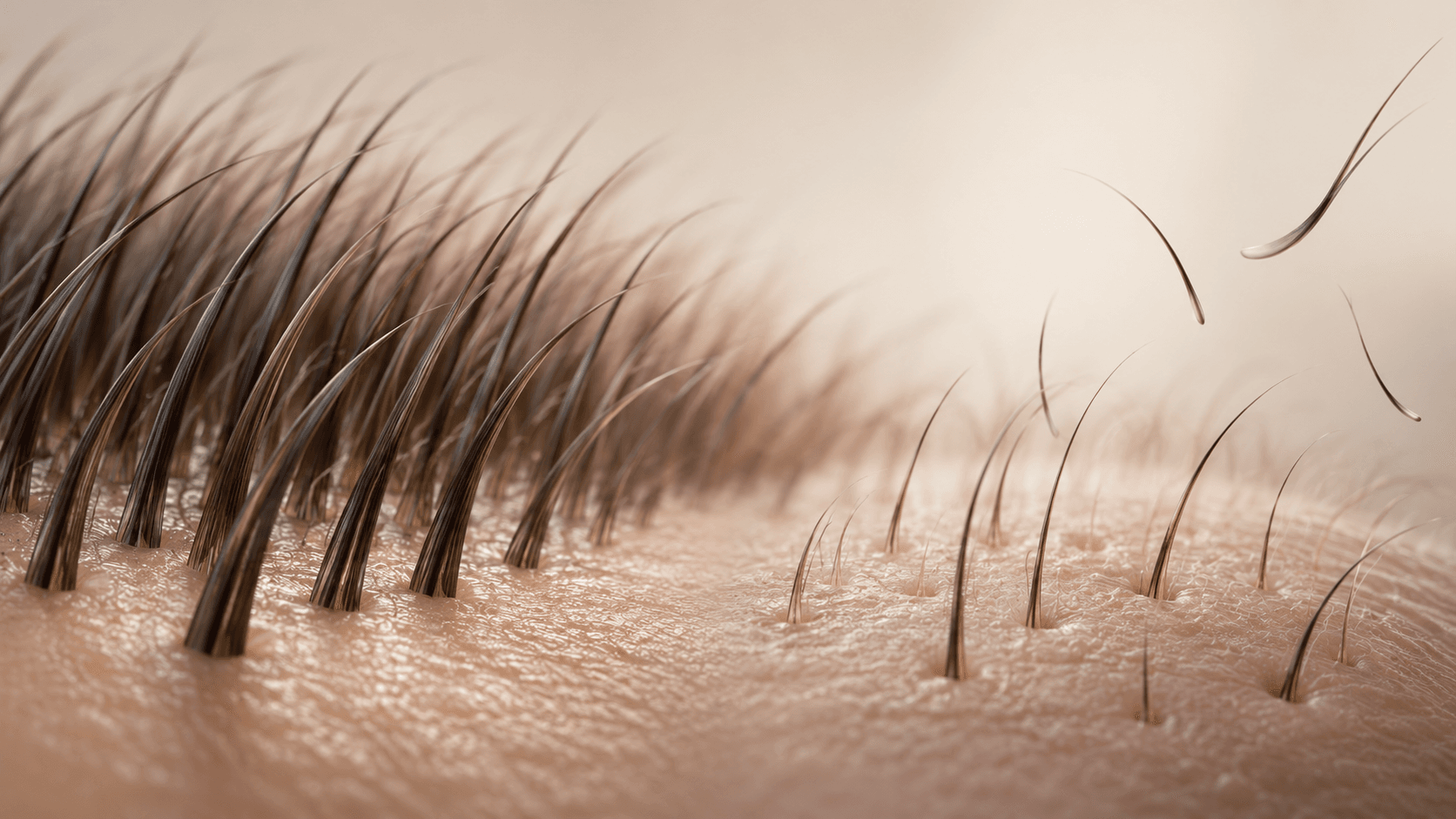
Hair can fall out for dozens of reasons, from genetic predisposition and hormonal changes to stress, deficiencies, diseases or certain medications. Sometimes this is a temporary response, followed by gradual recovery of growth. In other cases, hair loss progresses and requires diagnosis and treatment.
In brief: the most common causes include androgenetic alopecia, telogen shedding after stress or illness, hormonal changes, nutrient deficiencies, autoimmune diseases, scalp problems and damage from persistent pulling.Mayo Clinic
It is important not only to notice increased shedding, but also to understand what type of hair loss is occurring and what caused it.
How much hair is normal to lose each day?
Daily shedding is a natural part of the growth cycle. On average, a person may lose approximately 50–100 hairs a day, usually without noticing, because new hair grows at the same time.Mayo Clinic
Other changes may be warning signs:
- much more shedding than before;
- a widening part;
- reduced hair density;
- bald patches;
- a receding hairline;
- hair falling out in separate areas;
- shedding lasting several months or progressing.
The pattern of hair loss often helps a doctor identify a possible cause.
1. Androgenetic alopecia: genetic hair loss
Androgenetic alopecia is one of the most common causes of gradual thinning in men and women. It is associated with genetic predisposition and follicle sensitivity to androgens. Over time, follicles become smaller and hair becomes thinner and shorter.PubMed
In men, the first changes often include:
- a receding hairline;
- bald areas developing at the temples;
- reduced density at the crown.
Women more often experience gradual thinning along the central scalp and a widening part.
Genetic hair loss usually develops gradually rather than suddenly.
If follicles in an area are already significantly weakened, a doctor may consider different treatment or restoration options. In some cases, hair transplantation may be an option, but suitability is determined only after assessing the cause, donor area and stability of hair loss.
Medikout helps compare clinics specializing in hair transplantation and obtain a preliminary assessment of your case.
2. Stress, illness or a sudden change in the body’s condition
Severe physiological or emotional stress may cause telogen effluvium.
Many hairs shift from active growth into the resting phase and then start falling out. This often happens some time after the triggering event rather than immediately.PubMed
Possible triggers include:
- high fever or severe infection;
- surgery;
- significant physical injury;
- childbirth;
- severe emotional stress;
- rapid weight loss;
- very restrictive diets;
- insufficient protein intake;
- certain medications.PubMed
With telogen effluvium, hair usually thins evenly across the entire scalp, rather than in one specific area.
This type of shedding is often temporary if the cause is addressed, but the normal growth cycle takes time to recover.PubMed
3. Hormonal changes
Hormonal balance affects the hair growth cycle. Hair loss may therefore be associated with:
- pregnancy;
- the postpartum period;
- menopause;
- thyroid dysfunction;
- other endocrine changes.
For example, many women notice a sharp increase in shedding after childbirth. This may be a form of telogen effluvium caused by hormonal changes.Mayo Clinic
If hair loss is accompanied by changes in weight, the menstrual cycle, well-being or other symptoms, a doctor may recommend further investigation.
Start with a match, not a random list of clinics
Answer a few questions and see which factors matter for your case
4. Iron deficiency and nutritional problems
Severe calorie restriction, insufficient protein or certain deficiencies can affect hair.
Medical literature specifically mentions iron deficiency, malnutrition and rapid weight loss among factors associated with telogen effluvium.PubMed
This does not mean you should start taking iron, biotin or other supplements on your own whenever hair falls out.
It is better to identify the cause through a consultation and, if necessary, tests.
5. Alopecia areata
If hair falls out in clearly defined round or oval patches, alopecia areata may be one possible cause.
This disease involves the immune system affecting hair follicles.Mayo Clinic
Alopecia areata can present in different ways, from one small patch to more extensive hair loss.
In this situation, first consult a dermatologist. Hair transplantation is not a universal solution for an active autoimmune process.
6. Scalp diseases
Hair loss can result from scalp diseases as well as changes in the hair itself.
Doctors consider possible causes such as:
- fungal infections;
- inflammatory diseases;
- certain forms of scarring alopecia.
Scarring alopecia can irreversibly damage follicles, making early diagnosis particularly important.PubMed
If shedding is accompanied by redness, pain, itching, scaling, crusts or scars, it is best not to delay seeing a dermatologist.
7. Medications
Some medications can affect the hair growth cycle.
Mayo Clinic lists possible causes including medications used for cancer, arthritis, depression, heart disease, gout and high blood pressure.Mayo Clinic
This does not mean you should stop medication on your own.
If shedding began after a new treatment was prescribed, discuss it with the prescribing doctor.
8. Hairstyles that constantly pull on the hair
Tight ponytails, braids, extensions or other hairstyles that create persistent tension may cause traction alopecia.
Early changes may be reversible when constant pulling stops. However, if injury continues for a long time and scarring develops, some hair loss may become permanent.Mayo Clinic
Pay particular attention to thinning along the hairline and temples.
- Treatment & materials
- Hotel nights
- Transfers
- Coordinator-translator
How can you identify the cause of hair loss?
A photo or the amount of hair on a brush often cannot establish the exact cause.
A doctor may assess:
- when shedding began;
- whether it was sudden or gradual;
- where density decreased;
- family history of hair loss;
- recent illnesses, surgery or stress;
- medications;
- diet and weight changes;
- the condition of the scalp.
Trichoscopy, laboratory tests or other examinations may be used if needed. Modern reviews also emphasize accurately distinguishing androgenetic alopecia, telogen effluvium, alopecia areata and scarring alopecia.PubMed
When should a hair transplant be considered?
Hair transplantation may be an option if the cause of hair loss allows donor follicles to restore areas with reduced density.
It is most often considered for stable genetic hair loss, but the decision depends on the individual case.
Before the procedure, assess:
- the type of alopecia;
- the donor area;
- the degree of hair loss;
- possible further progression;
- overall health;
- a realistic scope of restoration.
It is therefore best to start not by choosing FUE or DHI, but by asking why your hair is falling out and whether transplantation is suitable in your situation.
How can Medikout help?
If you are already considering hair transplantation abroad, Medikout helps make the selection stage clearer.
Medikout is not a clinic. We help match clinics to your case, compare available options and send your photos for a preliminary assessment.
For personalized options, you can complete the short Medikout quiz. We will then help find clinics suited to your needs and arrange a preliminary consultation.
Start with a match, not a random list of clinics
Answer a few questions and see which factors matter for your case
Frequently asked questions
Why did my hair suddenly start falling out heavily?
Sudden diffuse shedding may be related to telogen effluvium after illness, stress, surgery, childbirth, rapid weight loss or other changes in the body. Assess the cause with a doctor.PubMed
Can stress cause hair loss?
Yes. Severe physical or emotional stress can disrupt the growth cycle and trigger telogen effluvium.PubMed
Does hair loss always mean baldness?
No. Some types are temporary. For example, telogen effluvium often gradually resolves after the triggering factor is addressed.PubMed
Which vitamins are missing when hair falls out?
There is no single universal “vitamin for hair loss.” Deficiencies may be a cause, but so may genetics, hormonal changes, stress, diseases or other factors. Supplements are best taken only when indicated.
Will a hair transplant help?
This depends on the cause and the donor area. Transplantation may be an option for some forms of stable hair loss, but is not a universal treatment for all types of alopecia.
References
- American Academy of Dermatology — Hair loss: causes
- Mayo Clinic — Hair loss: symptoms and causes
- PubMed — Telogen Effluvium
- PubMed — Shedding: An updated guide to a common cause of hair loss
- PubMed — Recent Advances in Understanding of the Etiopathogenesis, Diagnosis, and Management of Hair Loss Diseases
- PubMed — Androgenetic Alopecia: A Review