
How to Avoid a Scam Clinic: A Safety Checklist
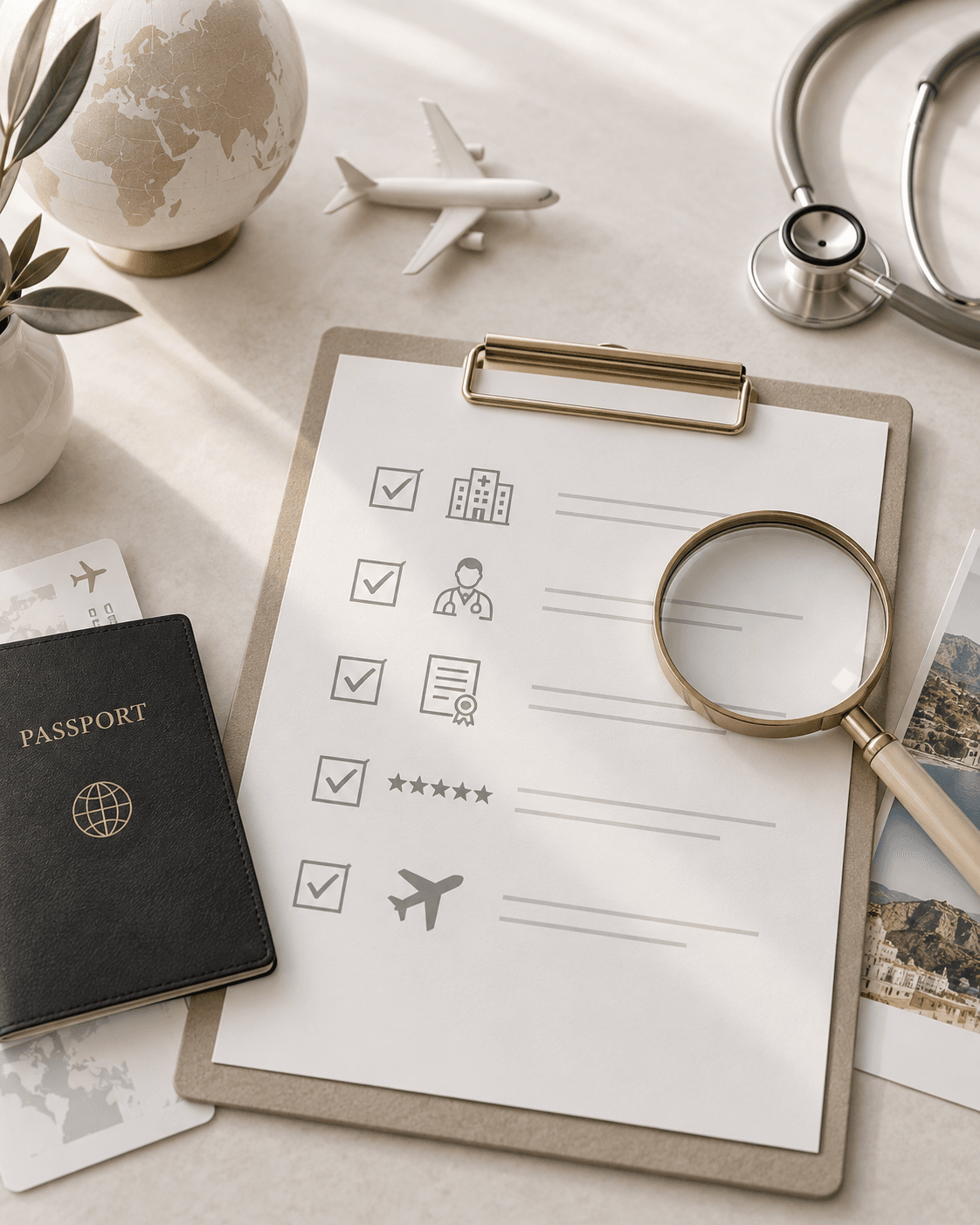
Medical tourism provides access to quality treatment, but the number of scam clinics is also growing. They promise “the best results,” “the lowest prices,” and “risk-free guarantees,” yet patients may lose money and suffer harm to their health.
The short answer: check the clinic before paying, not afterward. Use the checklist below to avoid scams.
7 Signs of a Scam Clinic
- No doctor is named. The clinic does not say who will perform the procedure.
- Fake accreditations. The website displays JCI or ISO logos but provides no certificate numbers.
- Only positive reviews. The website shows only perfect reviews, with none on independent platforms.
- Pressure to pay. The clinic demands full payment before a consultation or threatens that you will “lose the discount.”
- No written plan. Treatment is described only verbally, without a written protocol.
- The license cannot be verified. The clinic does not provide a license or registration number.
- Promises of “no risk.” The clinic claims that the procedure is “100% safe” and has “no complications.”
How to Check a Clinic Before Paying
1. Check Accreditation
- Look for international accreditations: JCI, TEMOS, ISO.
- Verify the certificate number on the accrediting organization’s website.
- Do not trust logos that cannot be verified.
2. Check the Doctor
- Ask for the doctor’s full name, qualifications, and registration number.
- Check the doctor in the national medical register.
- Read reviews specifically about that doctor.
3. Check Reviews
- Read reviews on independent platforms such as Google, Trustpilot, and forums.
- Look for reviews with specific details, rather than generic thank-you messages.
- Pay attention to negative reviews and how the clinic responds.
4. Request a Written Plan
- Obtain a written treatment protocol before paying.
- Review the listed materials, methods, and timelines.
- Make sure the patient receives informed consent documentation.
5. Check the Price
- Obtain a written estimate covering all expenses.
- Make sure there are no hidden charges.
- Compare the price with market rates.
Before paying, make sure you have:
- The name of the accrediting organization and the certificate number.
- The doctor’s full name, qualifications, and registration number.
- A written treatment protocol.
- A written estimate covering all expenses.
- The patient’s informed consent documentation.
- Reviews on independent platforms.
- A way to contact former patients.
Start with a match, not a random list of clinics
Answer a few questions and see which factors matter for your case
Frequently Asked Questions
How can I verify a clinic’s accreditation?
Check the certificate number on the accrediting organization’s website (JCI, TEMOS).
Can I trust reviews on a clinic’s website?
No. Read reviews on independent platforms such as Google, Trustpilot, and forums.
What should I do if a clinic pressures me to pay?
This is a red flag. Look for another clinic.
Can a doctor be verified?
Yes. Check the doctor in the national medical register.
What if the clinic does not provide a written plan?
Do not agree to treatment. This is a sign of a scam.