
Hair transplant or minoxidil: when treatment can be an alternative to surgery
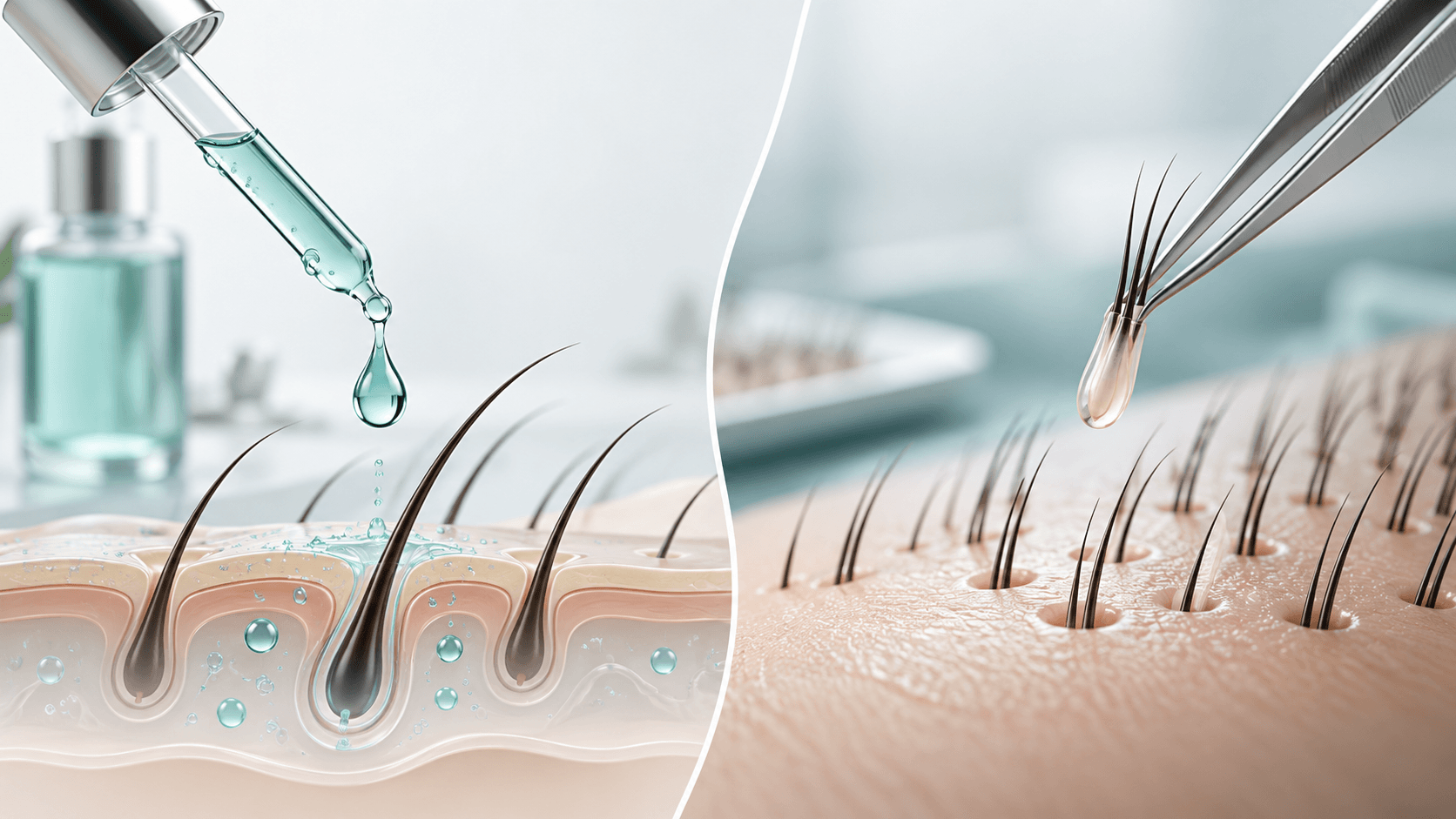
When hair starts thinning, a key question is whether medication is enough or whether it is time to consider a hair transplant.
In brief: minoxidil and hair transplantation address different tasks. Minoxidil may help slow hair loss and support growth from still-active follicles. A transplant restores hair in areas where substantial density has already been lost. For some patients, treatment can delay or even remove the need for surgery; for others, medication and transplantation are combined.
What is minoxidil and how does it work?
Minoxidil is one of the best-known medications used for androgenetic hair loss.
It is most commonly applied topically as a solution or foam on the scalp.
According to the American Academy of Dermatology, minoxidil may:
- stimulate hair growth;
- help reduce further loss;
- maintain the thickness of existing hair.
However, it cannot fully restore scalp hair if follicles in an area have already lost the ability to produce hair normally.American Academy of Dermatology
That is why it is important to distinguish thinning hair from an area where almost no hair remains.
When might minoxidil be enough?
Minoxidil is more often considered in early androgenetic alopecia, when hair remains but is gradually becoming thinner and less dense.
Treatment may be especially relevant if:
- hair loss began relatively recently;
- hair is thinning but there are no large completely bald areas;
- stabilization should be attempted before surgery;
- the patient is not yet ready for a transplant;
- the doctor believes surgery should be postponed.
AAD also notes that younger patients with progressing hair loss are sometimes advised to try medication first and assess transplant suitability later.American Academy of Dermatology
How long does minoxidil take to work?
Minoxidil does not produce instant results.
AAD states that noticeable changes may require around 6–12 months of regular use. Responses differ: some patients see clearer results, while others see minimal change.American Academy of Dermatology
This is one reason why assessing it after a few weeks is usually too early.
Use it as prescribed by your doctor or as directed for the specific formulation.
What happens if you stop minoxidil?
One main difference between minoxidil and transplantation is the need for ongoing treatment.
If the medication helps maintain hair, its effect gradually fades after stopping. Hair maintained or thickened by therapy may begin thinning again.American Academy of Dermatology
Minoxidil should therefore usually not be seen as a short course lasting a few months.
For some patients, it is long-term therapy.
Start with a match, not a random list of clinics
Answer a few questions and see which factors matter for your case
When can minoxidil no longer replace a transplant?
If an area lost much of its hair long ago, medication has limited possibilities.
Minoxidil works on existing follicles. It does not create new follicles where none remain.
In this situation, a doctor may consider transplantation.
During transplantation, healthy follicular units are moved from the donor area, usually the back or sides of the head, to thinning or bald areas.American Academy of Dermatology
In simple terms:
minoxidil helps preserve and support the hair that remains;
a transplant moves hair to an area where there is no longer enough.
Minoxidil or transplantation for receding temples?
A receding hairline is one of the most common reasons men seek transplantation.
If hair at the temples has only begun to thin, the doctor may first assess medication options.
If a clearly hairless area has formed, minoxidil alone may not provide the desired hairline restoration.
A transplant may create a new hairline, provided the donor area is sufficient and the patient is suitable for surgery.
What if the crown is thinning?
Thinning at the crown may be different.
If many fine, weakened hairs remain, medication can sometimes have a more noticeable effect than in a completely bald area.
Before a transplant, assess how much hair can still be preserved and strengthened.
For some patients, treatment delays crown transplantation or reduces the area needing surgery.
Can minoxidil be used after transplantation?
Yes, doctors may recommend medication after transplantation in some cases.
The reason is simple: transplantation does not stop genetic loss of native, non-transplanted hair.
AAD notes that medication after transplantation may slow further thinning and support the overall result.American Academy of Dermatology
An international consensus from 2026 also discusses topical and low-dose oral minoxidil for male and female pattern hair loss before and after transplantation. However, the regimen and timing of restarting after surgery must be determined individually by a doctor.PubMed
Does a transplant mean minoxidil is no longer needed?
Not necessarily.
Imagine a patient whose front hairline was restored, while the hair behind it keeps gradually thinning.
Without controlling further loss, differences between the transplanted area and natural hair may appear years later.
A good long-term plan should therefore consider not only how the hair looks today, but how loss may progress.
ISHRS also describes combining medication with surgical hair restoration.ISHRS
- Treatment & materials
- Hotel nights
- Transfers
- Coordinator-translator
Who should avoid starting minoxidil on their own?
Before treatment, it is best to understand the cause of hair loss.
Not every type is androgenetic alopecia.
Hair can also fall out because of:
- telogen effluvium after illness or severe stress;
- deficiencies;
- hormonal changes;
- autoimmune diseases;
- scalp diseases;
- scarring alopecias;
- certain medications.
AAD emphasizes that appropriate treatment depends on identifying the cause.American Academy of Dermatology
Starting therapy simply because “there is less hair,” without assessing the cause, is therefore not the best strategy.
What about oral minoxidil?
Besides topical products, low-dose oral minoxidil is also used in practice.
However, this is not simply a cosmetic product for self-use.
In the international consensus from 2026, experts recommend assessing the patient, including blood pressure, and individual risks and contraindications before prescribing it.PubMed
Discuss the oral form with a doctor rather than choosing a dose yourself.
How can you decide what is best for your case?
“Minoxidil or transplantation?” does not always mean one or the other.
Sometimes the best approach is treatment first, then reassessment.
In other cases, it is transplantation plus therapy to preserve native hair.
Before deciding, assess:
- the cause;
- age and progression rate;
- how long the hairless area has existed;
- the donor area;
- how much hair can still be preserved;
- the desired hairline and density;
- willingness to continue long-term treatment;
- expectations.
Transplantation also requires enough healthy donor hair and the ability of hair to grow in the recipient area.American Academy of Dermatology
When should treatment be tried first?
The doctor may recommend medication first if:
- loss is at an early stage;
- many follicles remain;
- loss is actively progressing;
- the patient is very young;
- the future balding pattern is hard to predict;
- a sufficient result without surgery is possible.
If treatment gives satisfactory results, transplantation may be postponed or unnecessary. ISHRS also notes that some patients responding well to medication may not proceed to surgery.ISHRS
When should a transplant be considered?
Transplantation may be more logical when:
- there are stable areas of substantial baldness;
- medication cannot restore the desired density;
- the donor area is sufficient;
- the cause is suitable for transplantation;
- expectations are realistic.
This does not mean stopping treatment after surgery. For some patients, both approaches complement each other.
How can Medikout help?
If you are unsure whether to have a transplant now or consider treatment first, obtain an assessment of your specific case.
Medikout is not a clinic. We help find hair transplant clinics, compare options and obtain a preliminary assessment based on your hair and donor area.
Complete the short Medikout quiz and describe your concerns. If needed, add photos of your hair and donor area for a more specific preliminary clinic assessment.
Start with a match, not a random list of clinics
Answer a few questions and see which factors matter for your case
Frequently asked questions
Can minoxidil completely replace a hair transplant?
Sometimes yes, if loss is early and treatment gives sufficient results. But minoxidil cannot create new follicles in a completely bald area.
Will hair grow with minoxidil?
In some people it stimulates growth and improves density, but responses vary. Noticeable effects are usually assessed after several months of regular use.American Academy of Dermatology
Does minoxidil need lifelong use?
If it works for maintaining hair in androgenetic hair loss, its effect usually lasts only while therapy continues. Benefits gradually fade after stopping.American Academy of Dermatology
Can you have a transplant without minoxidil?
Yes. Minoxidil is not required for every patient. Medication needs are determined individually.
Which is better: minoxidil or transplantation?
They are not direct competitors. Minoxidil supports and stimulates existing hair, while transplantation moves healthy follicles to areas of loss. The choice depends on the stage and cause.
References
- American Academy of Dermatology — Male pattern hair loss: treatment
- American Academy of Dermatology — Hair loss: diagnosis and treatment
- American Academy of Dermatology — Hair transplant
- PubMed — Updated Review of Treatment of Androgenetic Alopecia
- PubMed — Consensus recommendations for minoxidil in hair transplant patients
- International Society of Hair Restoration Surgery — Combined surgical and medical hair restoration therapy