
Dental implants with periodontitis: is the procedure possible?
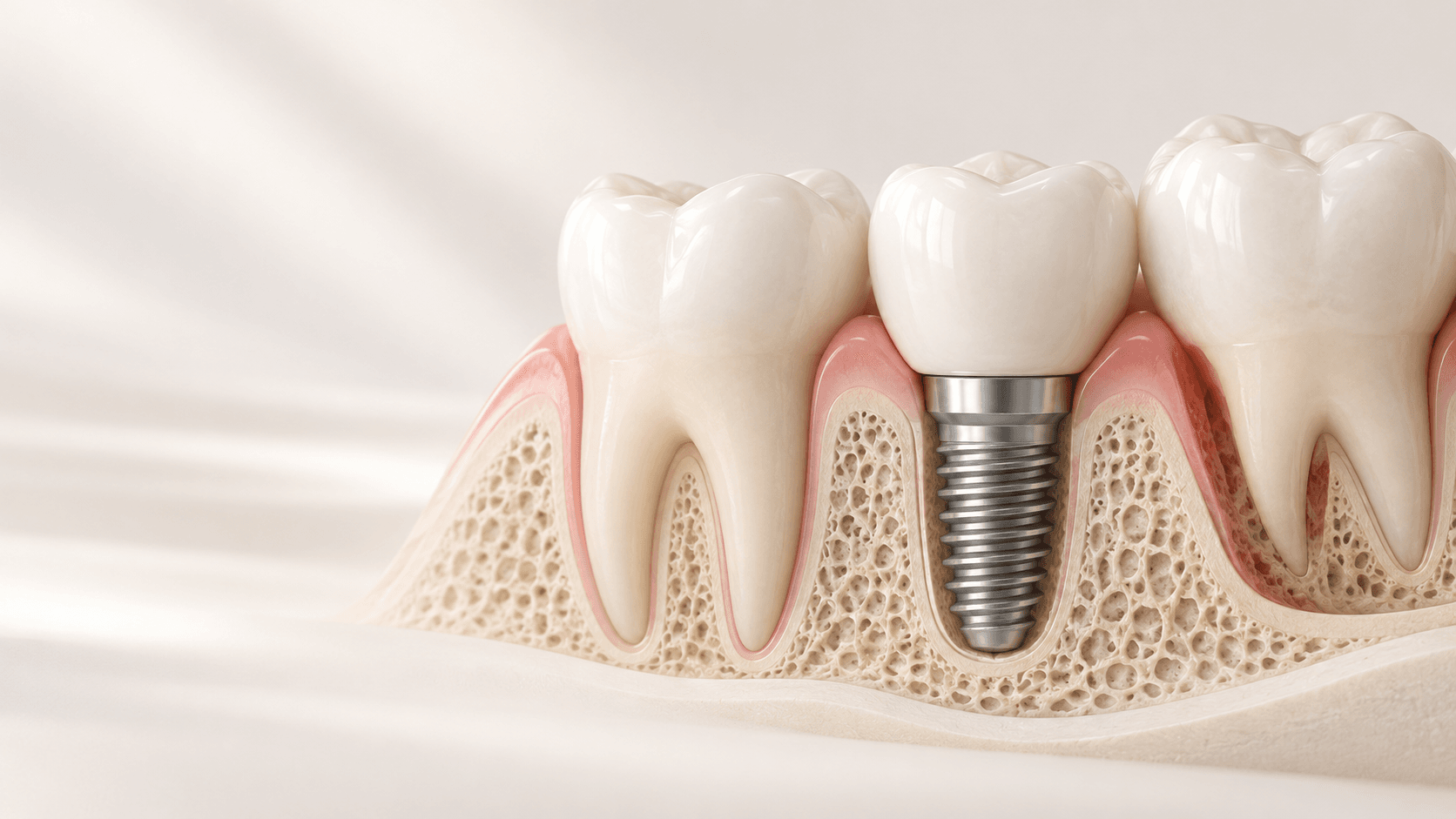
Periodontitis does not automatically make dental implants unsuitable for you. However, placing implants in the presence of active, untreated periodontitis is not recommended: the disease must first be controlled, the gums and bone assessed, and only then should implantation be planned. The European Federation of Periodontology explicitly states that periodontitis must be successfully treated before implant treatment begins.efp.org
In brief: implants are possible with periodontitis, but patients with a history of the disease have a higher risk of inflammation around an implant. Proper preparation, hygiene control and regular follow-up are therefore particularly important.efp.org
What is periodontitis, and why does it matter before implants?
Periodontitis is an inflammatory disease of the tissues supporting a tooth: the gums, periodontal ligament and bone.
As it progresses, symptoms may include:
- bleeding gums;
- periodontal pockets;
- exposed roots;
- bad breath;
- loose teeth;
- bone loss;
- eventually, tooth loss.
Bone and gum health are especially important when planning implants: the implant needs sufficient bone support, and surrounding tissues must remain healthy.
Can implants be placed with periodontitis?
Yes, in many cases they can.
The key condition is that the disease must be stabilized before implants are placed.
The European Federation of Periodontology notes that implants placed with active periodontitis have a higher risk of infection around the implant, instability and loss.efp.org
Treatment usually follows this sequence:
diagnosis → periodontitis treatment → reassessment → implant planning.
This does not mean every patient must wait many months. The extent and duration of preparation depend on disease stage, bone condition and other factors.
Why avoid implants with active periodontitis?
An implant itself cannot develop tooth decay, but the surrounding tissues can become inflamed.
There are two main conditions:
Peri-implant mucositis
This is inflammation of the soft tissues around an implant without bone loss.
With timely detection and treatment, it is usually reversible.American Academy of Periodontology
Peri-implantitis
This is more serious inflammation involving both soft tissues and loss of bone around the implant.
In severe cases, the implant may lose support and need removal.efp.org
That is why periodontitis should be treated before, rather than after, implant placement.
Start with a match, not a random list of clinics
Answer a few questions and see which factors matter for your case
Is the risk higher for people with previous periodontitis?
Yes.
Even when periodontitis has been treated, its history remains a risk factor for peri-implant diseases. The European Federation of Periodontology recommends closer follow-up for these patients after implant placement.efp.org
This does not mean an implant will necessarily fail to integrate.
Rather, patients need to take greater care with:
- home oral hygiene;
- professional cleaning;
- check-ups;
- the condition of natural teeth;
- the gums around implants;
- risk factors, including smoking.
What needs to be done before implantation?
Before treatment, the doctor should assess not just the missing-tooth site, but the entire mouth.
The following may usually be needed:
Gum examination
The doctor assesses inflammation, bleeding, periodontal pockets and tooth mobility.
X-rays or CT
Cone-beam computed tomography can help assess bone volume and shape and plan implant position. EFP includes radiographic assessment and, when necessary, CT in the standard implant planning stage.efp.org
- Treatment & materials
- Hotel nights
- Transfers
- Coordinator-translator
Periodontitis treatment
The aim is to reduce inflammation and bacterial load and achieve stable tissues.
A periodontist determines treatment according to the disease stage.
Reassessment
After therapy, the doctor checks whether the gums are stable enough to proceed with implants.
What if periodontitis has already caused substantial bone loss?
Bone loss does not always make implants impossible.
But it can change the treatment plan.
In some situations, the doctor may consider:
- bone grafting;
- bone regeneration;
- a sinus lift in the upper jaw;
- changing the position or number of implants;
- another type of prosthetic restoration.
The decision follows CT and a clinical examination.
That is why two clinics may suggest different plans for the same patient: one may recommend individual implants, another All-on-4 or All-on-6.
If you have received several different plans, Medikout can help compare options and find clinics that work with your type of case.
All-on-4 with periodontitis: is it possible?
Some patients with severe periodontitis have teeth, or an entire dentition, that can no longer be saved.
In this situation, the doctor may consider restoring the full dental arch on implants, for example using All-on-4 or All-on-6.
But periodontitis alone does not mean all teeth must be extracted.
Before that decision, assess:
- which teeth can still be saved;
- the extent of bone loss;
- whether the disease is stable;
- whether there is enough bone for implants;
- the patient’s risk factors.
Removing all teeth just to proceed to implants faster should not be an automatic decision.
Is bone grafting necessary?
Not always.
Periodontitis can cause bone loss, but the amount differs between people.
One patient may have enough bone for implants without additional procedures, while another may need reconstruction.
An exact plan cannot therefore be established from a message or general photo alone.
For a preliminary assessment, the clinic usually requests X-rays or CT, with the final decision made after examination.
Smoking and periodontitis: why does it matter?
Smoking is another risk factor for tissues around implants.
EFP states that smokers have a higher risk of peri-implant diseases and implant stability problems.efp.org
If a patient has both a history of periodontitis and smokes, the doctor may assess surgical risks particularly carefully.
How do you care for implants after periodontitis treatment?
Treatment does not end with implant placement.
Regular supportive care is especially important for patients with periodontitis.
The following are needed:
- thorough daily cleaning;
- cleaning between teeth;
- professional hygiene;
- regular check-ups;
- monitoring the gums and bone.
EFP recommends closer monitoring for patients with previous periodontitis because their peri-implantitis risk is higher.efp.org
Which symptoms after implants should not be ignored?
Persistent inflammation should not remain around the implant after healing.
See a dentist if you notice:
- bleeding gums around the implant;
- swelling;
- bad breath or an unpleasant taste;
- discharge;
- pain appearing after a period without problems;
- movement of the implant, bridge or denture.
EFP and the American Academy of Periodontology list bleeding, swelling and movement of the restoration as possible signs of peri-implant disease.efp.org
How can Medikout help?
If you have periodontitis and are considering dental implants, All-on-4 or All-on-6 abroad, find a clinic that assesses not only missing teeth, but also periodontal and bone health.
Medikout is not a clinic. We help patients find suitable clinics, compare treatment options and obtain a preliminary assessment of their case.
Complete the short Medikout quiz and state which treatment you need. If you already have a panoramic X-ray or CT, the clinic can use it for a preliminary assessment.
Start with a match, not a random list of clinics
Answer a few questions and see which factors matter for your case
Frequently asked questions
Can implants be placed if the gums bleed?
First identify the cause. If bleeding is due to active periodontitis, treatment of the disease is recommended before implants.efp.org
Will implants integrate after periodontitis?
Implants are possible after successful periodontitis treatment, but the disease history increases the risk of later peri-implant complications. Hygiene and regular monitoring are therefore especially important.efp.org
Does periodontitis need treatment before All-on-4?
Periodontal condition and active infection must be assessed before implantation. Even if some extractions and full prosthetic rehabilitation are planned, the doctor must first assess the tissues, bone and risks.
Can periodontitis develop around an implant?
Technically, disease around an implant is called peri-implant mucositis or peri-implantitis, rather than periodontitis. Peri-implantitis may involve bone loss around the implant.American Academy of Periodontology
Is periodontitis an absolute contraindication to implants?
No. But untreated active periodontitis is a serious contraindication to immediate implant placement. The disease must first be controlled.efp.org
References
- European Federation of Periodontology — Dental implants: FAQs
- European Federation of Periodontology — Peri-implant diseases
- European Federation of Periodontology — Prevention of peri-implant diseases
- European Federation of Periodontology — Guideline on treatment of peri-implant diseases
- American Academy of Periodontology — Peri-Implant Diseases